

The Industrial Internet of Things (IIoT) has been growing rapidly over the last several years to the point where it connects billions of devices and millions of people and collects and shares incredibly large amounts of data. One of the IIoT’s biggest advantages is it can form the foundation for a wide range of smart manufacturing solutions. Machine learning (ML), artificial intelligence (AI), big data, analytics, manufacturing execution systems (MES), enterprise resource planning (ERP), augmented/virtual reality (AR/VR), cloud and edge computing, digital twins, digital threads and many other applications can all be built on, or access, an IIoT foundation.
To take advantage of IIoT capabilities, many companies must first admit their technology and systems are old and not getting the job done. Coupling this with bureaucracy that’s too big, too hierarchical and too slow leaves manufacturers with processes that aren’t reliable, repeatable or predictable. What’s needed isn’t just new technology and systems, it’s creating a vision for the future with new business processes and capabilities.
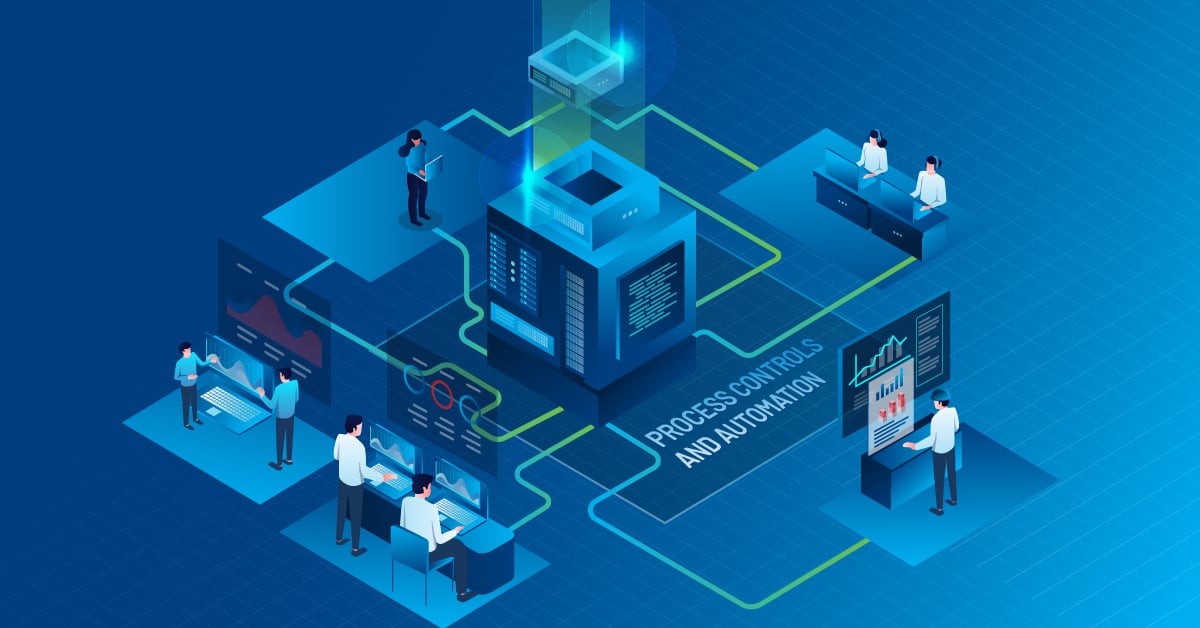
Contrary to some opinions, the IIoT is not at all meant to replace traditional process control and automation systems. Far from it. Process control and automation will always be required to perform real-time, closed loop, regulatory control of manufacturing processes – something the IIoT was not designed to do.